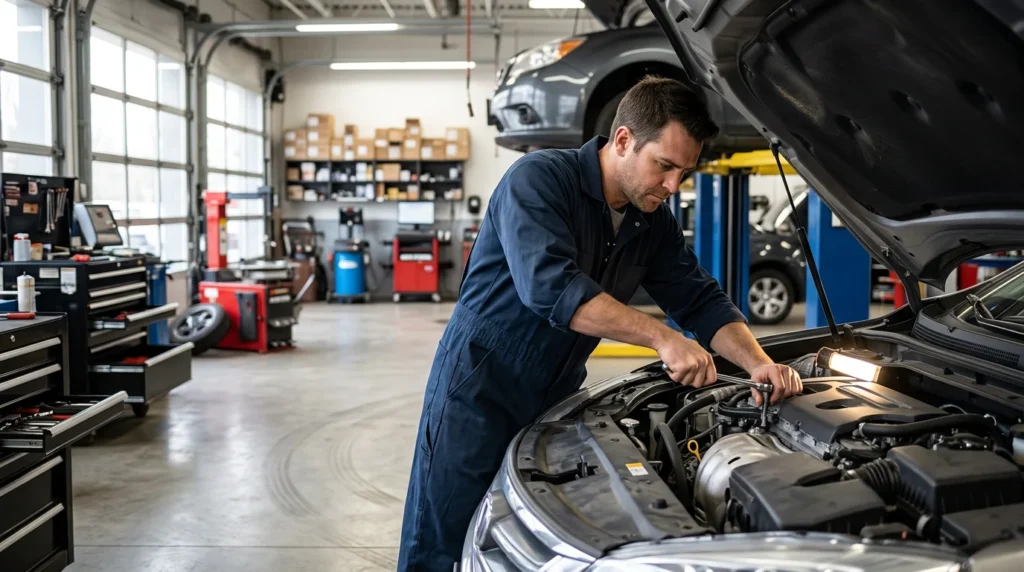
Quick answer: Choose a trustworthy shop by looking for clear communication, written estimates, and a willingness to show you the problem on the vehicle. Ask how they diagnose issues, what parts they plan to use, and what warranty they offer on parts and labor. A good shop explains priorities (safety first, then reliability), provides realistic timelines, and calls for approval before any extra work.
Quick Signs You’re in Good Hands
Use this quick pass/fail checklist when you call or stop by an auto repair shop Sugar Hill GA location:
Communication & process (Yes/No):
Will they ask symptom questions (when it happens, warning lights, recent work) instead of guessing? Yes/No
Will they explain what they’ll test to confirm the cause (not just read a code)? Yes/No
Will they provide an itemized written estimate before work begins? Yes/No
Will they get your approval before any additional work beyond the estimate? Yes/No
Will they show you the issue (worn parts, leaks, test results) in plain language if you ask? Yes/No
If you get more “No” than “Yes,” keep shopping. A shop that can’t describe its diagnostic steps or won’t put estimates and approvals in writing is harder to trust when surprises come up.
Sugar Hill, GA-Specific Checklist Before You Commit
Local habits matter. Here’s a short Sugar Hill/Georgia-focused checklist to keep the process clean and documented:
- Written authorization: Confirm they won’t start work (or exceed the estimate) without your approval by phone/text/email and that the authorization is noted on the repair order.
- Reading local reviews critically: Look for patterns about communication, timelines, and honoring estimates—not just star ratings. Be cautious of reviews that only say “great service” with no details, or rants that never mention what the shop did to resolve the issue.
- At pickup, request documentation: Ask for an itemized invoice that separates parts, labor, shop supplies/fees, and diagnostics.
- Parts transparency: Request the parts list (brand/part numbers when available) and ask which parts are OEM, aftermarket, or remanufactured.
- Warranty in writing: Get the warranty terms printed on the invoice or a separate document (what’s covered, time/mileage limits, and any exclusions).
These steps make it easier to compare shops in the Sugar Hill area and protect you if a problem returns.
Questions to Ask Before You Approve Repairs
Good questions protect your wallet and your car. Start with: “What’s the diagnosis, and what evidence supports it?” For example, a battery issue can look like a starter problem; a scan code can point to a system but not the exact failed part. You want to hear how they verified the root cause (testing voltage drop, smoke testing an EVAP leak, checking fuel trims, road testing with live data).
Ask what parts they plan to install: OEM, aftermarket, or remanufactured. None is automatically “best” for every job, but the shop should explain trade-offs. For sensors and ignition components, OEM-quality parts often prevent repeat failures. For wear items like brakes, quality matters more than brand name—rotors, pads, and hardware should match the vehicle’s needs and driving habits.
Also ask about warranty terms in plain English: what’s covered, for how long (a typical range many shops offer is 12 months/12,000 miles, though policies vary), and what could void it (overheating the engine, ignoring new warning lights, using the wrong fluids).
What to Do Next: A Simple Call Script and Decision Flow
Step 1: Call script (ask these 3 questions):
1) “How do you confirm the cause—what tests will you run beyond pulling codes?”
2) “Will I get an itemized written estimate, and will you contact me for approval before any added work?”
3) “What parts are you quoting (OEM/aftermarket/reman), and what’s the parts-and-labor warranty in writing?”
Step 2: Documents to request: Ask for the written estimate/repair order before work starts, then at pickup request an itemized final invoice, the parts list (brand/part numbers when available), and written warranty terms. If you’re curious or the repair is major, ask for the old parts back (some items are “core” returns; they should explain if that applies).
Step 3: When to get a second opinion: Get one if the diagnosis is unclear, if they can’t show test results, if the fix is a high-dollar repair like an engine/transmission replacement or major electrical work, or if the recommendation doesn’t match the symptoms you’re experiencing. Look for a shop that will show test results and get approval before additional work—ask Team Ryan Automotive or any shop you’re considering to follow that same process.