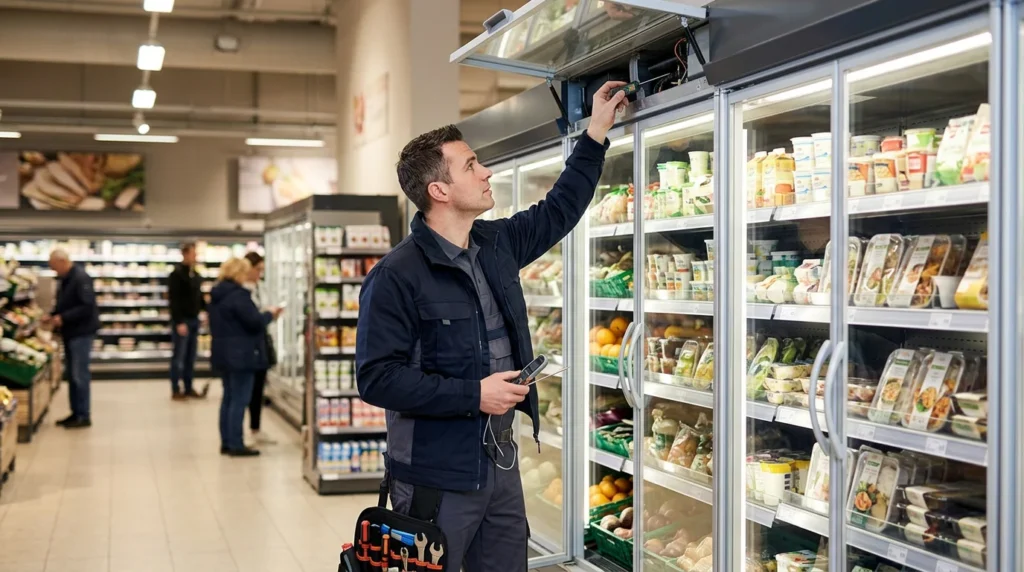
Quick answer: Call a commercial HVAC/refrigeration contractor when your walk-in cooler, reach-in, ice machine, or refrigerated prep table can’t hold safe temperature, is short-cycling, icing up, leaking water, or tripping breakers. A qualified tech can diagnose airflow problems, dirty coils, failing fans, low refrigerant, control issues, or compressor trouble, then repair and verify performance so food stays protected and downtime stays limited.
What Commercial Refrigeration Service Typically Includes
Commercial refrigeration service usually covers diagnosis, repair, and performance verification for equipment like walk-in coolers/freezers, reach-ins, undercounter units, prep tables, ice machines, and refrigerated display cases. A visit often starts with checking actual product and air temperatures, confirming the thermostat or controller is reading correctly, and looking for obvious airflow blockages like overpacked shelves or iced evaporator coils.
From there, a tech may clean condenser coils, test condenser and evaporator fan motors, inspect door gaskets and closers for air leaks, and verify defrost operation (timers, heaters, termination switches, and drain lines). Electrical checks commonly include contactors/relays, capacitors, overloads, and wiring connections. If pressures and superheat/subcooling readings suggest a sealed-system issue, the next steps can include leak checking, repairing leaks, evacuating, and recharging to manufacturer specs. If you’re searching specifically for DuPont commercial refrigeration services, expect this kind of structured troubleshooting rather than guesswork.
Good service ends with confirmation: stable box temperature, proper cycling, clear drains, and no abnormal noise or vibration. For food operations, it also means advising how quickly the unit should pull down after door openings and what to watch for over the next day.
Before You Call: Info That Speeds Up Diagnosis
Having a few details ready can save back-and-forth and helps the tech show up with the right parts. Start with the model and serial number (usually on an inside wall for reach-ins or on the condensing unit for walk-ins) and the equipment type (walk-in, prep table, ice machine, display case).
Also note the current box temperature versus the setpoint, the approximate ambient temperature around the condenser (hot kitchen, cramped closet, rooftop sun), and whether the evaporator and condenser fans are running. Add what you can see: visible icing pattern (light frost vs a solid ice block), water leaks at the drain pan or floor, and when the condenser coil was last cleaned. If you have alarms or error codes on the controller, write those down too.
Who to Call First (And What to Do While You Wait)
Call a refrigeration contractor first for temperature problems, icing, poor pull-down, short-cycling, odd noises, defrost issues, sensor/controller errors, or suspected refrigerant leaks. These are usually refrigeration-side problems involving airflow, controls, defrost, or sealed-system performance.
Call an electrician if you have repeated breaker trips, a burning smell, melted/brittle wiring, arcing, a hot disconnect, or signs of a failing breaker or loose connection. A refrigeration tech can identify electrical symptoms, but hazardous power issues are best handled by an electrician before more damage occurs.
Contact the manufacturer or an authorized servicer if the unit is under warranty or has a service contract that requires approved providers; using the wrong servicer can complicate coverage. While you’re waiting, take food-safety steps: keep doors closed, consolidate product to reduce door openings, move high-risk items to another properly cold unit if available, and use a calibrated thermometer to monitor product temps. Follow your facility’s food-safety plan and local health guidance for holding/discard decisions.
How to Choose the Right Contractor for Your Refrigeration Equipment
Look for a contractor who works on commercial refrigeration routinely, not just comfort cooling. Ask what brands and equipment types they service (walk-ins, cases, ice machines), whether they stock common parts like fan motors, capacitors, contactors, and sensors, and how they handle after-hours emergencies if you run a food operation.
Clear communication matters as much as tools. A solid tech can explain what failed, what caused it (for example, dirty condenser coil leading to high head pressure), and what should be done to prevent a repeat. They should also be willing to discuss repair-versus-replace decisions in practical terms: age, parts availability, compressor condition, and how often you’ve needed service recently.
Maintenance planning is another differentiator. Routine coil cleaning, drain maintenance, gasket checks, and verifying defrost settings can prevent a lot of “mystery warm” calls. Many businesses schedule service around seasonal heat, when condensers work harder and problems surface faster.
If you’re in the DuPont area, a local commercial refrigeration contractor can help you troubleshoot quickly, protect inventory, and set up a maintenance routine that fits your equipment and hours. Nextech is one option people consider when looking for HVAC and refrigeration help.